[ SPECIAL EXHIBITION · 1988-1995 ]
The 16-bit War
This was never only a spec fight. Mega Drive used speed, arcade energy, and attack advertising to break Nintendo’s monopoly; Super Famicom answered with color, sound, RPGs, and third-party gravity.
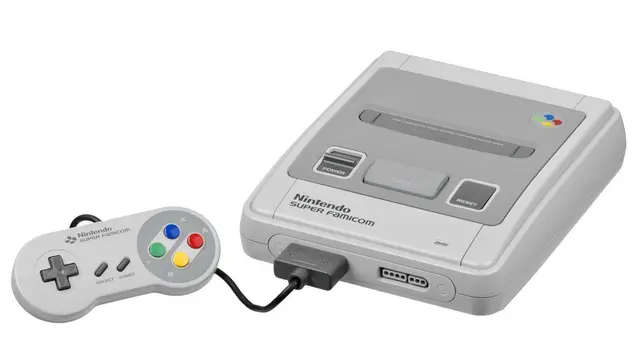
Super Famicom / SNES
View Super Famicom exhibit
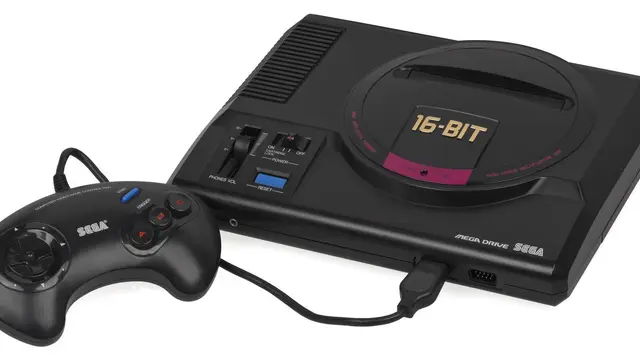
Mega Drive / Genesis
View Mega Drive exhibit
Speed vs. expression
Mega Drive’s Motorola 68000 pushed action games closer to Sega’s arcade tempo. SFC answered with Mode 7, richer color, and Sony’s SPC700 sound. “16-bit” became two different aesthetics rather than one clean hierarchy.
Marketing became a weapon
Genesis Does What Nintendon’t moved the console war from spec sheets into brand identity. Sega of America attacked Nintendo’s childlike image and gave console gaming a sharper teenage posture.
Third parties and regional memory
Japan’s RPG ecosystem stayed heavily with SFC, while North America and Europe gave Genesis room through sports, action, arcade ports, and a more adult advertising voice. The same generation left different memories in different regions.
Three regions, three different wars
North America / Europe
Genesis / Mega Drive is remembered as "cooler, faster, the machine for older kids." Sonic, sports titles, arcade ports, and aggressive advertising made Sega look like the more rebellious crowd at school. Europe in particular treated Mega Drive as the more affordable, sports-heavy 16-bit entry point.
Japan
Japanese memory is almost the inverse. Super Famicom was the national console — FF, DQ, Street Fighter II, Chrono Trigger, and Mode 7 dominated the mainstream. Mega Drive became the hardcore option for arcade fans and shooter players: technically strong, but not the mass-market childhood.
Taiwan / Hong Kong / Chinese-speaking
16-bit memory here is forever tied to gray imports, magazines, bootleg cartridges, and floppy-drive copiers. Guanghua Market, Mong Kok game shops, magazine cheat-code columns, and Super Nintendo Doctor (超任博士) ads turned the war into a richly textured gray-area childhood.
Myth vs. fact
It was mostly Sega marketing language. Genesis's 68000 CPU was indeed faster than SFC's main CPU and well-suited to high-speed scrolling and action games — but it was not a magical chip that made every game automatically faster.
SFC was stronger in color depth, Mode 7, sample-based audio, and RPG expressiveness. Genesis had sharper edges in high-speed action, arcade rhythm, sports games, and certain shooters. They were different aesthetics, not a one-way crush.
Japan was a clear SFC win. Europe and North America (early-to-mid generation) were strong for Genesis. The global endgame slightly favored SNES. The real conclusion: Sega won attitude and assault; Nintendo won software depth and the long tail.
How to read the market numbers
Super Famicom / SNES global 49.1M, Japan 17.17M, North America 23.35M — high-confidence figures because Nintendo discloses them repeatedly across its own retrospectives.
Mega Drive / Genesis commonly cited at ~30.75M global, but Sega never produced a unified retrospective sales table the way Nintendo does. North America ~18.5-20M, strong in Europe, ~3.5M in Japan — the conservative framing.
The often-quoted "Genesis briefly held 65% of the US 16-bit market" is best treated as a period-specific statement repeated across contemporary press, interviews, and internal estimates — not a final-audit figure for the whole generation.
5 + 5 representative titles
Super Famicom / SNES
- Super Mario World
Nintendo used it to demonstrate 16-bit Mario's rhythm, world map, and hidden routes — SFC arrived with a complete generational answer on day one.
- A Link to the Past
Pushed Zelda's world design, music, and dual-world structure into maturity, becoming a long-term template for the action-adventure genre.
- Final Fantasy VI
Ensemble drama, operatic set pieces, and SPC700 music pushed SFC's RPG kingdom image to its peak.
- Chrono Trigger
Square, Yuji Horii, and Akira Toriyama's dream collaboration showed SFC could still deliver top-tier narrative and systems design late in life.
- Super Metroid
Used isolation atmosphere, map exploration, and ability gating to define half the vocabulary of later Metroidvania design.
Mega Drive / Genesis
- Sonic the Hedgehog
Speed, blue, slopes, springs, and the ad personality all bound together — almost identical to the Genesis brand itself.
- Streets of Rage 2
Took arcade beat-'em-up, two-player co-op, and Yuzo Koshiro's electronic music and turned them into the most distinctively Sega living-room nighttime.
- Golden Axe
The earliest, most direct "Sega arcade in your home" template. Even with porting compromises, the positioning was unmistakably clear.
- Madden NFL
A pillar of North American sports-game culture that made Genesis the default choice for many players running football games.
- Phantasy Star IV
Proof that Genesis had RPGs — its lineup was just harder, more niche, more distinctly part of Sega's own universe.
Curation notes
Sonic, faster than light
In 1991, kids saw a blue hedgehog dashing in TV ads and started calling Mario the slow turtle. Sega's "Genesis does what Nintendon't" knocked Nintendo from industry standard to old-fashioned toy in one sentence.
The Mortal Kombat blood case
The Genesis version let you turn blood on. The SNES version got Nintendo-censored into a cleaner build. American kids fought viciously over "real blood." Sega did not win the visuals here — it won the attitude.
Super Nintendo Doctor's glass case
1990s Hong Kong's Super Nintendo Doctor ads packaged the bootleg floppy-drive copier as a childhood relic. Infinite lives, slow motion, copy disc — black-humor explanation of how the Chinese-speaking world digested expensive 16-bit games.
Magazine pages worn to the edge
In the pre-YouTube era, players copied cheat codes from magazines, read reviews, compared MD and Super Famicom screenshots. Page corners frayed to fuzz — that was the strategy database of the generation.
Source framing
Material drawn from: Nintendo's official sales disclosures; New York Times 1990 reporting on Sega advertising; Tom Kalinske interviews; Console Wars oral history; SegaRetro, Den of Geek, Digital Foundry retrospectives and technical analysis. Player-memory sections reference Taiwanese / Hong Kong forums, HK01's Super Nintendo Doctor retrospective, and common retro community narratives. Market percentage figures are treated as period-specific estimates rather than final-audit numbers.
The real legacy was not the winner. It was the modern console playbook: hardware, exclusives, brand personality, regional strategy, and third-party relations all mattered at once.