[ SPECIAL EXHIBITION · 1982-1985 ]
The Atari Crash
The North American console market did not grow in a straight line. After the Atari 2600 boom, it collapsed under oversupply, weak quality control, retailer returns, and price pressure. Nintendo’s NES comeback worked because it first rebuilt trust.
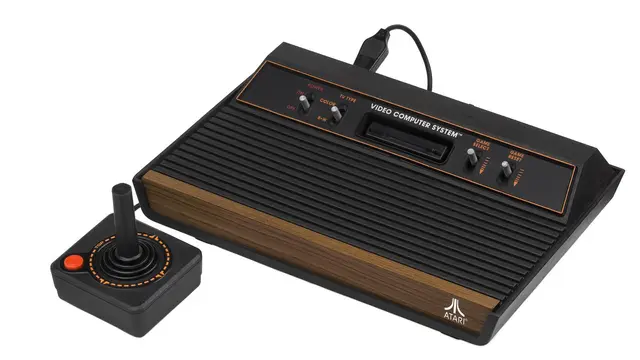
Atari 2600
View Atari 2600 exhibit
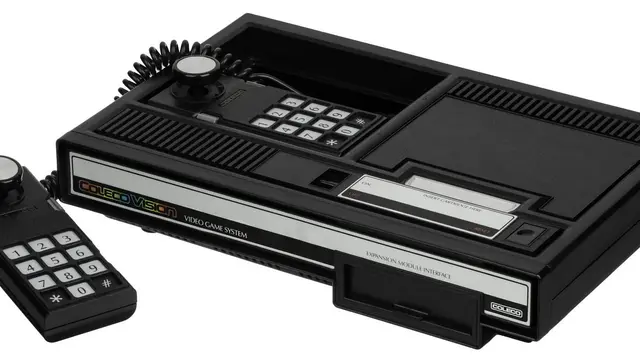
ColecoVision
View ColecoVision exhibit
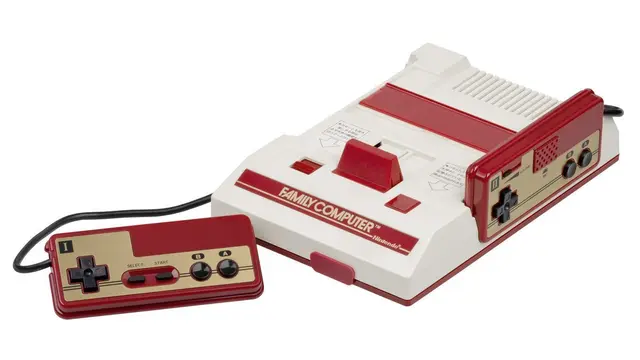
Famicom / NES
View Famicom / NES exhibit
E.T. was not the only cause
E.T. became the symbol because of its rushed development and heavy returns, but the deeper problem was market trust: too many games, uneven quality, overloaded retailers, and confused customers.
Third parties ran wild
After Activision proved independent games could succeed, the Atari 2600 market filled with publishers. Without strong licensing or quality controls, shelves became hard to read and harder to trust.
Nintendo sold order
NES was framed as an Entertainment System, with ROB, the Zapper, the Seal of Quality, licensing rules, and lockout hardware. Nintendo was selling confidence as much as games.
The crash was not a meteor — it was a chain reaction
Oversupply
After the Atari 2600 took off, market expectations rose past reason. Publishers, toy companies, and even non-gaming firms wanted in. Cartridges flooded the channel; shelf space and consumer wallets were finite, but supply had no brake.
Quality drift
Without clear licensing or quality control, the odds of buying a bad game went up. The deeper problem was not specific failures, but consumers losing the ability to tell whether any "Atari game" was worth trusting.
Retail backlash
Unsold cartridges became returns, markdowns, clearance, and inventory pressure. Once retailers got burned by game cartridges, stocking the next console got harder. This was the highest wall Nintendo would face entering North America.
Myth vs. fact
E.T. became the symbol because of its rushed development and heavy returns, but it was not a single cause. The crash came from oversupply, unstable quality, retail returns, broken consumer trust, the home computer price war, and Atari's own management problems compounding together.
More accurately: the North American home console market collapsed. Japan never crashed the same way — Famicom (1983) actually expanded steadily there, laying the foundation for NES's later North American push.
Super Mario Bros. mattered, but NES's early success also depended on hardware repackaging, retail persuasion, the Seal of Quality, licensing limits, lockout chips, and tight third-party control.
How Nintendo resold the idea of a "game console"
Renaming and disguise
North American retail had lost faith in "game consoles," so Nintendo packaged NES as the Nintendo Entertainment System. The casing resembled a VCR; ROB and the Zapper made it look unlike the dead consoles of the previous round.
A quality stamp
The Seal of Quality did not guarantee every game was good, but it communicated one thing: this is not a cartridge a random publisher dumped onto the shelf. Nintendo had to convince parents, players, and retailers that the platform had someone curating it.
Licensing + lockout
The 10NES lockout chip and the licensing program let Nintendo control who shipped games, in what quantity, and through which factories. The system raised monopoly concerns later, but in the post-crash North American market, it solved the immediate "out of control" problem.
Representative artifacts of crash and recovery
Crash side
- Pac-Man for Atari 2600
Sold huge but visually and experientially fell far short of arcade expectations — an early symbol of consumer trust starting to slip.
- E.T. the Extra-Terrestrial
Rushed, hard to understand, returned in volume, eventually buried in the desert — the most photographable single object in the entire crash.
- Mass low-quality unauthorized carts
The point is not any single game but that shelves filled with games consumers could not tell apart — they no longer knew who to trust.
- ColecoVision
Technically stronger, with sharp arcade ports — but pulled into the wider market freeze regardless.
- Home computer price war
Commodore 64 and others slashed prices, leading parents to feel a "computer that does homework" beat a pure game machine.
Recovery side
- Super Mario Bros.
Bound NES's control feel, level-design rhythm, and family-entertainment image into one core product — the centerpiece of the recovery narrative.
- Duck Hunt
The Zapper made NES look like a new toy, and helped the system distance itself from the previous round of Atari cartridges.
- The Legend of Zelda
Battery memory and long-form adventure showed home consoles could carry sustained play goals beyond high-score sessions.
- Mega Man
Third parties matured under Nintendo's rules, forming NES's late-life impression of "stable quality, serialized output."
- Contra
Combined arcade feel with home co-op, restoring belief that the console could be the living room's main battlefield.
Curation notes
It was not the desert that buried an industry
The Atari cartridge burial in the New Mexico desert is photogenic, but it was not the crash itself. The real horror was retailers refusing to stock, players refusing to trust, and companies afraid to bet. The desert just turned trust collapse into a single image.
The Pac-Man expectation gap
Arcade Pac-Man was a pop-culture monster. The Atari 2600 port let many players experience for the first time how much a home conversion could fall short of the original. When expectations get pulled too high, the gap becomes backlash.
What ROB actually accomplished
The ROB robot did not change game design history. But it completed its market task: making NES not look like a dying game console. It was not selling functionality — it was selling a reason to get past the retailer's door.
Nintendo's rigor was also its shadow
Nintendo rebuilt order, but in the same gesture established harsh licensing, production limits, and concentrated platform power. The same playbook that saved the market also planted the soil for later Sega attacks framing Nintendo as "too conservative, too childish."
Source framing
This page follows mainstream gaming history conventions: the 1983 "crash" refers to the North American home console market collapse, not the disappearance of the global gaming industry. E.T. and Pac-Man are symbolic anchors, not single causes. The Nintendo recovery section is built around NES's North American launch strategy, the Seal of Quality, the 10NES lockout, the licensing program, and retail repositioning. Further reading: Atari financials and contemporary retail trade press, Howard Scott Warshaw interviews, Racing the Beam, Game Over, The Ultimate History of Video Games, and Nintendo's official hardware history.
The crash showed that a console platform needs more than hardware and hits. It needs quality control, retailer confidence, third-party rules, and brand restraint. NES was, in part, an answer to Atari-era chaos.