[ SPECIAL EXHIBITION · 1991-2010 ]
The Museum of Failed Consoles
Console history is not written only by winners. Between 1991 and 2010, at least twelve home consoles and handhelds failed quickly after launch — some saw their parent company collapse, some bet on the wrong direction, some kept trying to do PDA/handheld hybrid even as smartphones arrived. This exhibit groups the twelve into three categories: **launched too early, bet on the wrong axis, and orphans of an ending era**. None of them failed because the hardware was bad — they failed because strategy, pricing, timing, or competition prevented the hardware from getting a chance. Those reasons matter more in retro history than the spec sheets themselves.
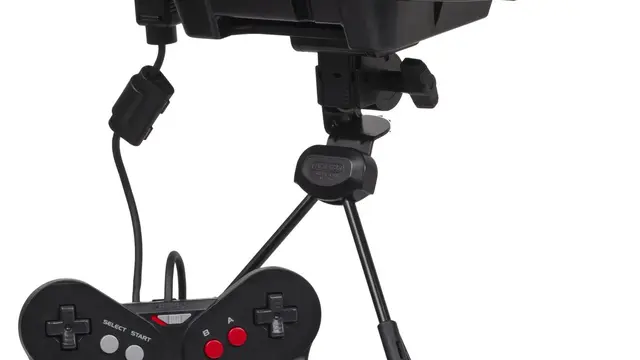
Virtual Boy
View Virtual Boy exhibit
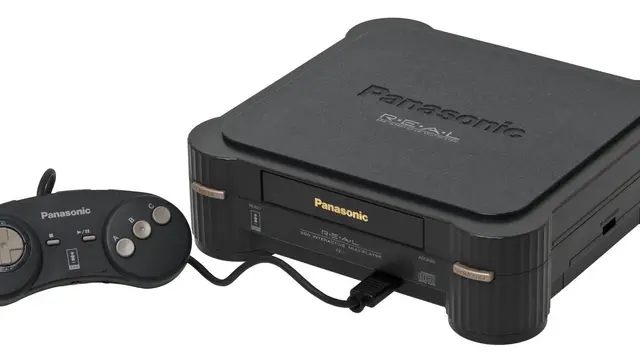
3DO Interactive Multiplayer
View 3DO exhibit
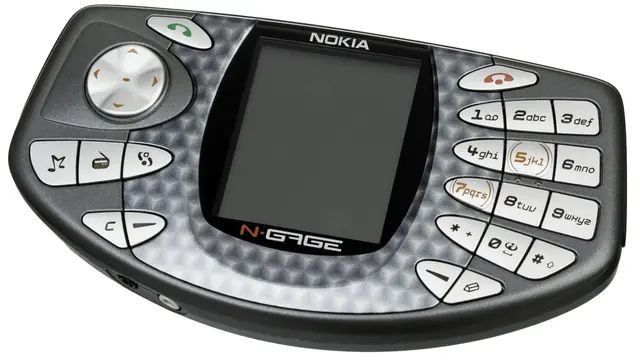
Nokia N-Gage
View N-Gage exhibit
Launched Too Early (1991-1993)
Four consoles arrived before the CD-ROM revolution had matured. Amiga CDTV (1991, USD $999) tried "living-room multimedia" and sold under 50K. FM Towns Marty (1993, ¥98,000) was the world's first 32-bit console but cost four times an SNES — 45K sold. 3DO (1993, USD $699) was EA founder Trip Hawkins' open-license experiment — 2 million sold. Amiga CD32 (1993) was killed by Commodore's April 1994 bankruptcy seven months after launch — 100K-300K sold. **The hardware was not the problem; the market was not ready for CD-ROM**.
Bet on the Wrong Axis (1994-1996)
PC-FX (NEC, 1994) skipped 3D entirely to focus on anime FMV — and missed the entire console generation when *Virtua Fighter* and *Final Fantasy VII* redefined the war as a 3D fight. 100K sold. Virtual Boy (Nintendo, 1995) bet on stereoscopic 3D too early; the red/black monochrome plus head-mounted goggles ruined the experience. 770K sold before Nintendo discontinued it within a year. Apple Bandai Pippin (1996) bet on "console + internet + Mac OS" at ¥64,800 — under 42K sold. Casio Loopy (1995) bet on "home console = sticker printer for girls" — 20K sold.
Orphans of an Ending Era (2003-2010)
Nokia N-Gage (2003) tried phone + handheld convergence — but the "taco phone" form factor and weak game library kept it under 2 million sold even before iPhone existed. Tapwave Zodiac (2003) tried PDA + handheld with PalmOS and ATI graphics — Tapwave went bankrupt six months after launch. Tiger Game.com (1997) and R-Zone (1995) are the evidence of Tiger's two consecutive console failures before the company exited hardware entirely. **The shared failure pattern: all of them tried to find a balance point between PDA, handheld, and phone — and iPhone in 2007 erased that balance point completely**.
The exhibits in this museum are not tragedies — they are textbooks. Each console failure corresponds to a clearly learnable strategic error: overpricing (Marty), parent company death (CD32), wrong technical axis (PC-FX), wrong timing (Virtual Boy), wrong audience (Loopy), wrong interface (N-Gage). **All of these mistakes have been reverse-engineered by winners like PS1, DS, and Switch** — half of any successful console formula comes from looking very carefully at the specimens of failure.