[ SPECIAL EXHIBITION · 1994-2001 ]
The Polygon Revolution
After the 16-bit war, console competition shifted from sprites, sound chips, and cartridges to CD-ROMs, 3D polygons, loading screens, memory cards, and analog control. PlayStation made games feel like pop culture, Saturn held the arcade line, and Nintendo 64 bet on cartridges and a different 3D future.
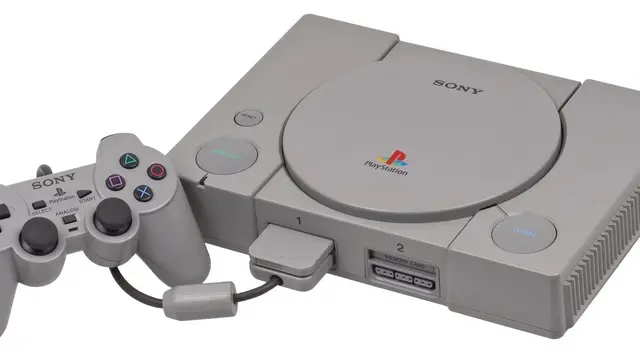
PlayStation
View PlayStation exhibit
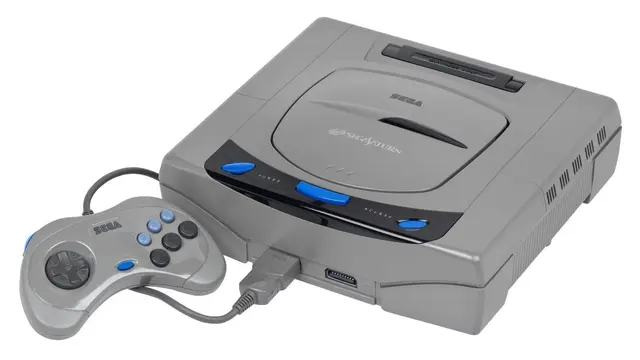
Sega Saturn
View Saturn exhibit
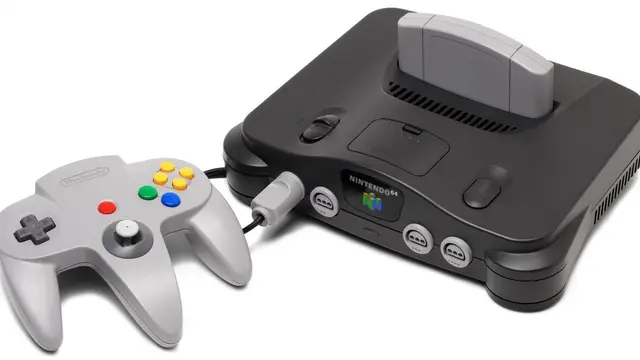
Nintendo 64
View Nintendo 64 exhibit
CD-ROM changed scale
CD-ROM pushed console content from a few megabytes into hundreds. CG movies, voice, full soundtracks, and longer RPGs became selling points, while loading, disc durability, piracy, and data streaming became new design problems.
3D rewrote design
Polygons forced designers to solve cameras, targeting, collision, depth, and player orientation. Early 3D can look rough now, but it records the moment games learned how bodies move through virtual space.
Controllers changed too
N64 analog, PlayStation Dual Analog / DualShock, and Saturn 3D Control Pad all answered the same pressure: the D-pad was no longer enough. From here, controllers became part of 3D grammar.
Three consoles, three lanes
PlayStation: nightclub, CD, memory card
Sony refused to package PlayStation as a children's toy, placing it instead in music, magazines, nightlife, and more grown-up advertising. Cheap CDs, friendly development, willing third parties — Square, Namco, Capcom, Konami — collectively pushed PS1 into fifth-generation mainstream.
Saturn: strong in 2D, painful 3D pivot
Saturn's multi-processor architecture and 2D capabilities had distinct Sega flavor — fighting games, shooters, and arcade ports were excellent. But facing the market's sudden full pivot to 3D, the multi-CPU development barrier, weak overseas strategy, and absent Sonic made it hard to compete with PS1 head-on.
Nintendo 64: cartridge island, analog future
N64 stuck with cartridges, gaining low load times and durability but losing CD capacity and most third parties. Through Super Mario 64, Zelda: Ocarina of Time, and GoldenEye 007, it proved 3D design could be remarkably mature — even as the software lineup narrowed.
From the cartridge era to the disc era
Capacity exploded
RPGs could now contain animation, voice acting, long cutscenes, and multiple discs. Final Fantasy VII's impact came not just from 3D but from an entire narrative wrapper landing in the living room — film and album, all at once.
Costs collapsed
CD pressing was vastly cheaper than cartridge production, with very different inventory risk. Third parties became more willing to try new IPs, longer narratives, and content-heavy releases — and PlayStation built its "lots of games, all kinds" image.
Piracy spread
Chinese-speaking world PS1 memory is often tied to mod chips, burned discs, Guanghua Market, and game-shop catalog lists. It accelerated adoption and made the boundaries between licensed, distributed, and gray-market increasingly complicated.
How to read the representative titles
PlayStation
- Final Fantasy VII
Pushed JRPG into global pop-culture center. CG, music, characters, and multi-disc all together built the "cinematic RPG" image.
- Metal Gear Solid
Voice acting, camera work, stealth pacing, and meta-staging proved 3D consoles could carry more film-like narrative.
- Resident Evil
Fixed cameras, budget constraints, and horror pacing combined into the mainstream vocabulary of survival horror.
- Gran Turismo
Real cars, license tests, tuning, and long-term progression pushed racing from arcade thrill to car culture.
- Tekken 3
Represented PS1's late-life 3D fighter maturity and revealed how critical Namco support was to PlayStation.
Sega Saturn
- Virtua Fighter 2
A signature arcade 3D fighter port to home. Preserved Sega technical credibility.
- Sega Rally Championship
Different surface feel and arcade pacing left Saturn's most distinctive racing memory.
- NiGHTS into Dreams
Combined with the 3D Control Pad, produced a uniquely Sega flying / orbital / dream-staging hybrid.
- Radiant Silvergun
Made Saturn one of the holy machines in shoot-'em-up collector circles.
- Guardian Heroes
Treasure mixed beat-'em-up, branching paths, and RPG progression — the platform's 2D-strength flagship.
Nintendo 64
- Super Mario 64
Taught players how to run, jump, and rotate the camera in 3D space. One of the starting points of modern 3D action gaming.
- The Legend of Zelda: Ocarina of Time
Z-targeting, scene rhythm, and 3D adventure structure completed the action-adventure genre's critical translation.
- GoldenEye 007
Brought split-screen multiplayer FPS into the living room — many players' first home "shooter party."
- Mario Kart 64
Four-player co-op, item chaos, and 3D tracks made party-style racing a long-term formula.
- Star Fox 64
Voice, Rumble Pak, and rail-shooter pacing demonstrated N64's other kind of thrill.
Curation notes
The first time you saw the FFVII opening
A train pulling in, the camera pulling out, Midgar lighting up. For many players, RPGs stopped being characters walking on grid maps and became something that could open like a film. In that moment, CD-ROM capacity became emotion.
The three-pronged controller confusion
The N64 controller felt strange the first time you held it — which two prongs do you grip? But once you pushed the analog stick and Mario walked, ran, and rotated in 3D space, you realized it was not strange but a new control language.
Saturn players defending the arcade flavor
When classmates were talking about PS1 RPGs and CG cinematics, Saturn players might have been playing Virtua Fighter 2, fighting-game ports, or shooter masterpieces. Not the most popular choice — but Sega's last attempt to put arcade soul into a home console.
The mod-shop catalog
1990s late-Taiwan PS1 memory often involves the game-shop counter, burned-disc catalogs, handwritten serial numbers, and clear plastic disc cases. The gray market accelerated software flow and left a complicated youth flavor.
Source framing
This page treats fifth-generation console history, platform-defining titles, and player memory as curatorial material. Sales and market narrative follow conventional historical framings: PlayStation crossed 100M globally and became mainstream; Nintendo 64 reached the ~30M tier with strong first-party output; Saturn reached the ~10M tier — relatively stronger in Japan, weaker overseas. A formal annotated edition could later add Sony / Nintendo official figures, SegaRetro, contemporaneous Edge / Next Generation reporting, and platform developer interviews.
The fifth generation was not just about polygon counts. It moved console games from toys and cartridges toward media, brands, 3D space, and older players. Modern games were sketched here first.